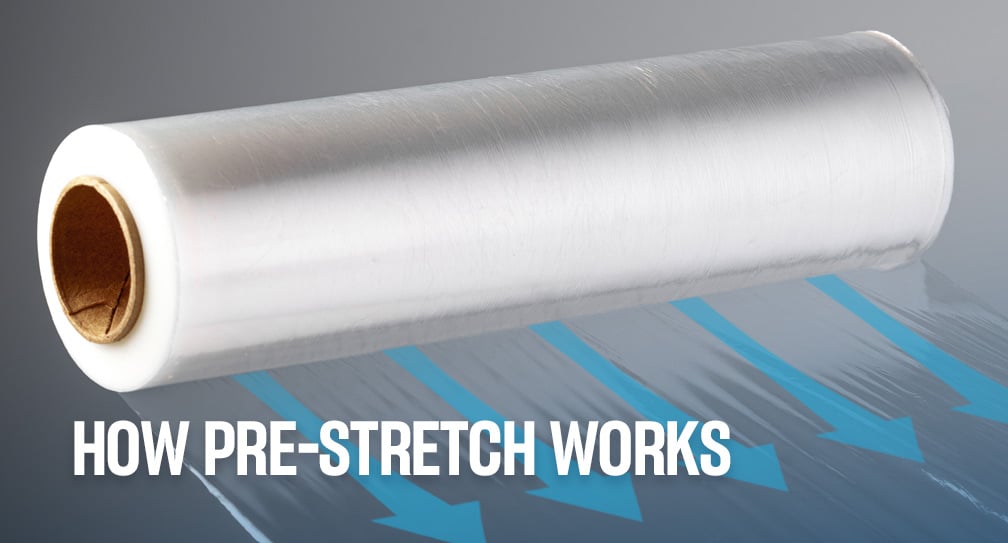
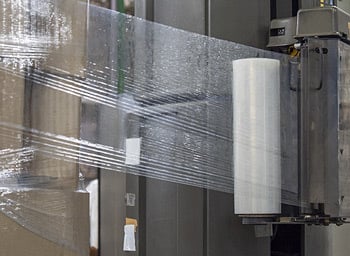
 Pre-stretch is a wrapper applied process that mechanically elongates the film before it reaches the load, so the work of stretching during application is done by the wrapper rather than relying on pallet rotation to stretch the film. This allows less film do more load-holding work, cutting film use and cost per load. High-performance cast machine film with pre-stretch delivers this efficiency at speed. This guide explains what pre-stretch is, how it works, and when it pays off.
THE DEFINITION
What is Pre-Stretch Film?
Pre-stretch capable stretch film is engineered to be mechanically elongated by a wrapping machine before it reaches the load, rather than being stretched only as it wraps around the pallet. That elongation is what lets a thinner, lighter film deliver the same or greater holding force as a heavier film applied without pre-stretch, which is the economic case for the technology.
THE MECHANISM
How Does Pre-Stretch Work in Stretch Film?
Pre-stretch works by running the film through two rollers turning at different speeds before it ever touches the load. The downstream roller turns faster than the upstream one, which pulls and elongates the film a set percentage in the machine direction. That elongated film already carries tension built into it, so wrapping the load applies the holding force generated in the machine to the film, rather than relying on force generated by the load itself. High-performance cast machine film built for this, such as IPG's Genesys line, can be pre-stretched to levels around 300 percent and beyond while still holding a load.
 THE COMPARISON
What is the Difference Between Pre-Stretch and On-Pallet Stretch?
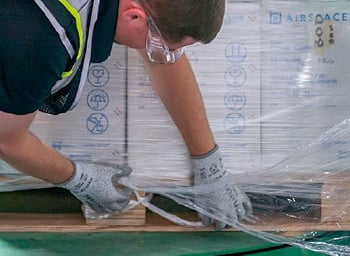
The difference between pre-stretch and on-pallet stretch comes down to when the film gets elongated. Pre-stretch elongates the film between rollers before it reaches the load, so the stretching happens under controlled tension inside the machine. On-pallet stretch, sometimes just tension-controlled wrapping, applies the film with less or no pre-elongation, much lower levels of stretching, and more film usage. Pre-stretch systems use less film per load for the same containment force; simpler direct tension setups use more film but need less specialized equipment to run.
|
CONCEPT |
WHAT IT MEANS |
WHY IT MATTERS |
|
Pre-Stretch |
Film Elongated before the load |
Less film, more holding force |
| On-Pallet Stretch (OPS) | Stretch applied during wrapping | Simpler, higher film use |
| Cast machine film | High clarity, consistent guage | Reliable performance speed |
| Pre-Stretch Ratio (F1) | Amount of Elongation | 10ft in / 40ft out = 300% prestretch |
| Tension or Draw (F2) | Force applied directly to load | More film, crushed loads |
THE COST CASE
How Much Film Does Pre-Stretch Save?
Pre-stretch saves film because an elongated film holds a load with less raw material per wrap than film applied without pre-stretch, so fewer feet of the film roll are needed to reach the same containment force. The savings scale with how aggressively a specific film and machine combination can pre-stretch without tearing or losing containment force.
THE CATEGORY
What Is a High-Performance Cast Machine Film?
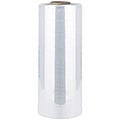
High-performance cast machine film is stretch film manufactured through a cast extrusion process, built specifically to be pre-stretched at high machine speeds while holding clarity, puncture resistance, and consistent gauge across the roll. IPG's Genesys line is built for this category, offering high load containment and puncture and tear resistance while running on high-speed wrappers at pre-stretch levels up to 300 percent and beyond.
|
IPG Genesys Stretch Film FA SuperFLEX-brand high-performance machine stretch film built for high pre-stretch applications, offering high load containment, excellent puncture and tear resistance, and high cling while running on high-speed stretch wrappers at pre-stretch levels up to 300 percent and beyond. |
THE BOTTOM LINE
Less Film Is Not a Trade-Off, It Is the Point
Pre-stretch film is not a thinner, weaker version of standard stretch film. It reaches the same or better holding force with less material because the elongation happens under controlled tension in the machine, rather than how much tension can be added to the load during wrapping. That is the entire mechanism behind the cost savings, not a compromise attached to it.
COMMON QUESTIONS
Frequently Asked Questions
|
See Pre-Stretch Film in the Lineup IPG's stretch film line and full selection guide are both online |