
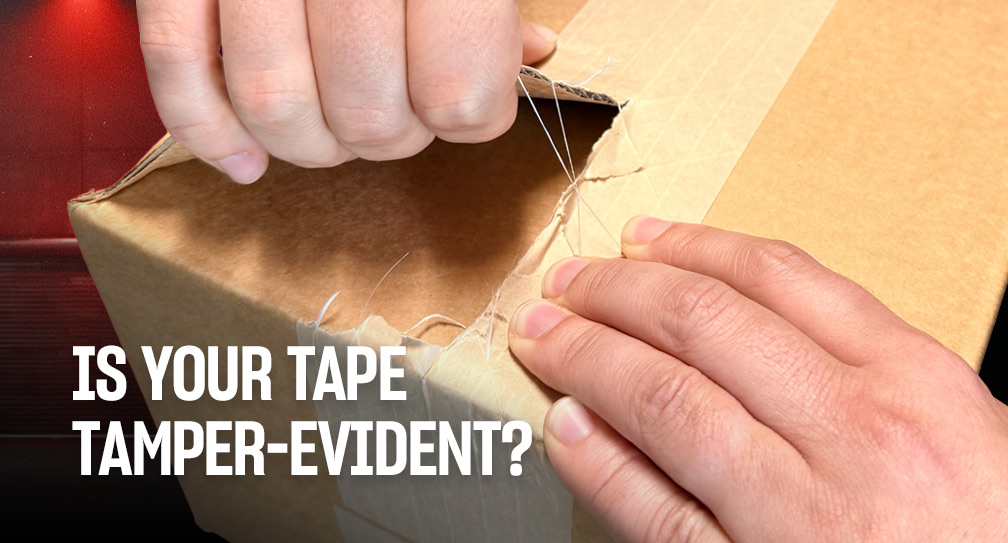
Tamper-evident tape secures high-value shipments by making theft immediately detectable. Water-activated tape fuses to the carton, so it cannot be peeled off and reapplied without destroying the box, and custom printing prevents a thief from slicing a package open and resealing it with generic tape. Together, the bond and the print turn a carton into visible evidence of tampering.
THE DEFINITION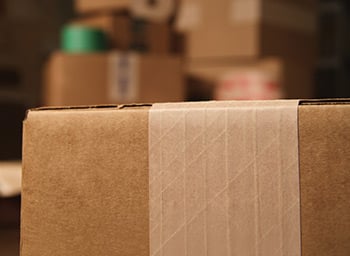
What is tamper-evident tape?
Tamper-evident tape is packaging tape built so that any attempt to remove or tamper with it leaves visible, unmistakable evidence rather than allowing a clean re-seal. Two mechanisms create that evidence: a bond that damages the carton itself when removed, and a printed design that cannot be quietly replaced with something generic. Together they turn a sealed carton into something that shows its own tampering history.
THE BOND
How does water-activated tape prevent package theft?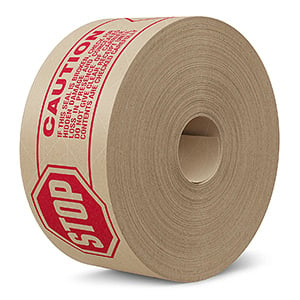
Water-activated tape prevents package theft because its adhesive soaks into and bonds with the corrugated fibers of the carton itself, rather than sitting on top of the surface the way plastic tape does. That means removing it tears the box, not just lifts the tape, so there is no way to peel it off and press it back down to hide that a carton was opened. Reinforced grades add fiberglass reinforcement for extra tear strength, which is exactly what IPG's Central and Red Alert reinforced tape lines are built around.
This is the core contrast with plastic pressure-sensitive tape, which can be sliced, lifted, and reapplied cleanly enough that a hurried inspection will not catch it. A fiber-tear bond removes that option entirely, since the evidence is the box itself, not just the tape sitting on it.
THE PRINT
How does custom-printed tape deter tampering?
Custom-printed tape deters tampering by defeating the most common workaround for tamper-evident tape, slicing the box open and resealing it with plain, unmarked tape. If the sealing tape carries a printed logo or a Stop Caution design, a thief cannot replace it invisibly, since generic tape will not match, and a mismatched reseal is immediately obvious on inspection.
This works alongside the bond rather than replacing it. IPG's Stop Caution printed tape is built around this exact idea, warning anyone handling the package to inspect the contents if the seal looks broken or replaced, which turns tampering deterrence into something visible at a glance rather than something that requires close inspection.
|
SECURITY LEVER |
WHAT IS DOES |
HOW IT DETERS THEFT |
|
Water-activated tape bond |
Fuses to the carton |
Removal destoys the box |
|
Custom print |
Visible Identifier |
Blocks slice-and-reseal |
|
Reinforced WAT |
Added tear strength |
Harder to compromise |
|
Inbound Inspection |
Checks for tampering |
Catches theft in transit |
How do I secure high-value shipments?
Securing high-value shipments comes down to following a consistent process, not relying on a single product decision:
- Identify which shipments are high-value or high-risk before they ship
- Apply reinforced water-activated tape, such as Central or Red Alert, to those cartons specifically
- Add custom print, a logo or a Stop Caution design, so resealing with generic tape is detectable
- Train staff to inspect for torn board or replaced tape on arrival, not just a broken seal
- Document and log any tampering incidents so patterns across carriers or routes become visible over time
THE INVESTMENT QUESTION
Is tamper-evident tape worth it for high-value shipments?
Whether tamper-evident tape is worth it for high-value shipments depends on what a single lost or compromised shipment actually costs, in replacement value, in the customer relationship, and in the investigation time spent figuring out where it happened. Reinforced water-activated tape costs more per roll than standard plastic tape, but that difference is small against the cost of even one high-value shipment that goes missing without a trace of where.
THE BOTTOM LINE
The Box Itself Becomes the Evidence
A bond that cannot be hidden and a print that cannot be replaced turn every carton into something that shows its own history. That is what actually deters theft, not a warning label alone, and it is the reason the bond and the print work best applied together rather than as separate choices.
COMMON QUESTIONS
Frequently Asked Questions
Can thieves remove water-activated tape?
 Removing it is possible, but not without tearing the carton fibers underneath, since the adhesive bonds into the board rather than sitting on the surface. That torn fiber is what makes tampering visible even when the tape itself still looks intact.
How can I tell if a package has been tampered with?
Check for torn or damaged board around the seam, a tape color or print that does not match the original, or a strip that looks reapplied rather than factory-sealed. Any of these on a reinforced or printed tape is a strong signal the box was opened after it shipped.
Is tamper-evident tape worth it?
Yes. Tamper-evident tape helps protect shipments by making tampering visible, reducing security risks, and providing greater confidence that packages arrive as intended. The added protection and peace of mind make it a valuable packaging solution for shipments of all types.
How do you stop package theft in shipping?
Stopping package theft in shipping combines a tamper-evident seal, so tampering cannot be hidden, custom printing, so the seal cannot be quietly replaced, and consistent inbound inspection, rather than relying on any single measure alone.
How confident do you feel with where the company is going?
We will begin in this chapter by dealing with some general quantum mechanical ideas. Some of the statements will be quite precise, others only partially precise. It will be hard to tell you as we go along which is which, but by the time you have finished the rest of the book, you will understand in looking back which parts hold up and which parts were only explained roughly.
How do you stop package theft in shipping?
Stopping package theft in shipping combines a tamper-evident seal, so tampering cannot be hidden, custom printing, so the seal cannot be quietly replaced, and consistent inbound inspection, rather than relying on any single measure alone.