So which tapes actually hold up? And what does "durable" really mean when a carton might sit in storage for months before it's ever touched? Here's what operations leaders, procurement teams, and packaging engineers need to know, and why water-activated tape (WAT) belongs at the top of any long-term storage specification.
WHY IT MATTERS 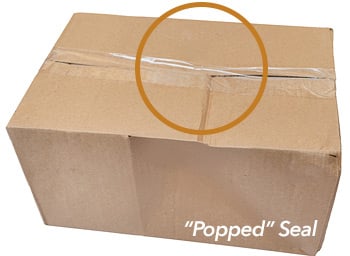
The Hidden Cost of Tape Failure in Storage
Tape failure in storage isn't a packaging problem, it's an operations problem. When cartons open in a freezer or arrive with failed seals after months in a distribution center, the costs multiply fast: damaged goods, re-packaging labor, inventory write-offs, and customer claims.
Most tape selection decisions come down to one question: what sticks now, at line speed, in today's conditions. But long-term storage demands a different question: what holds a year from now, after temperature swings, humidity changes, and the cumulative weight of a stacked pallet?
THE DURABLE SOLUTION
Why Water-Activated Tape Holds Where Others Don't
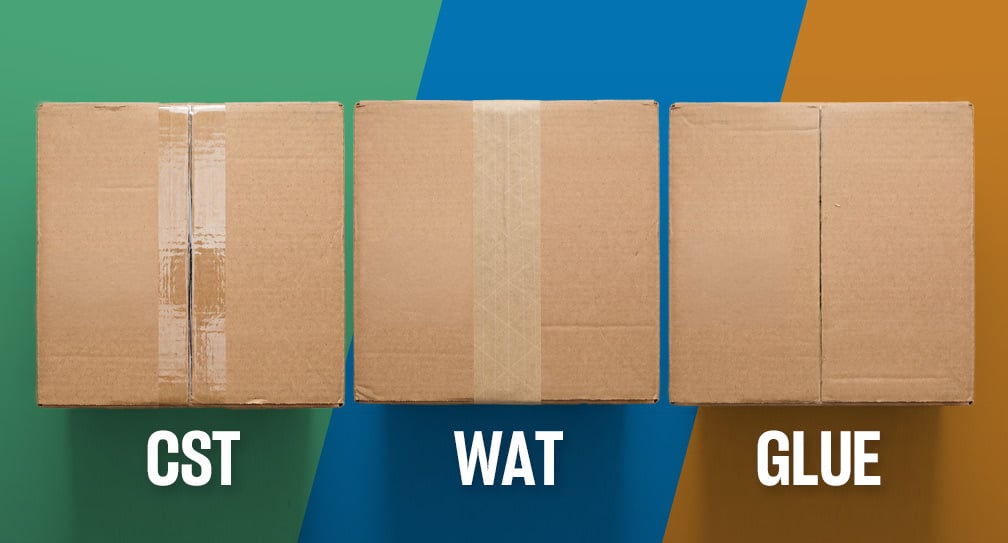
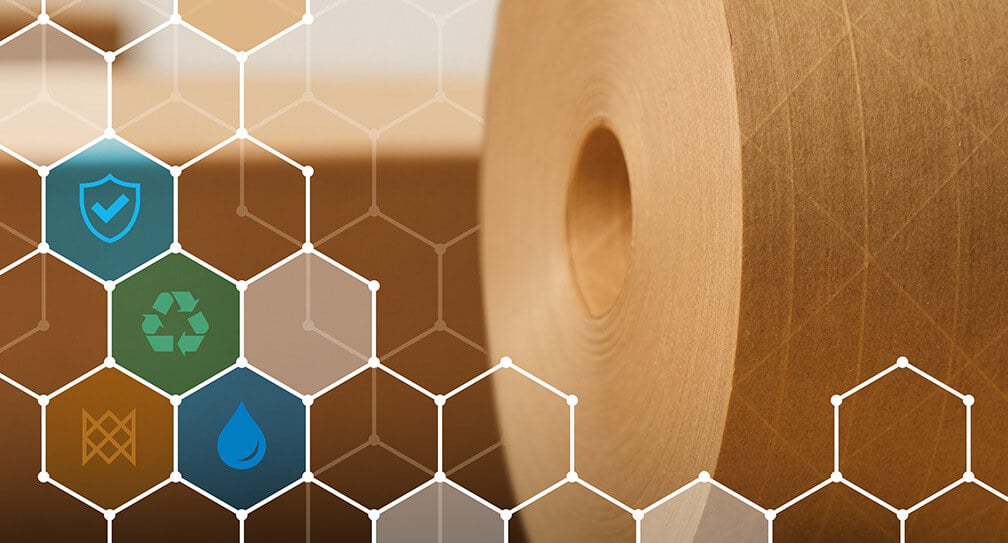
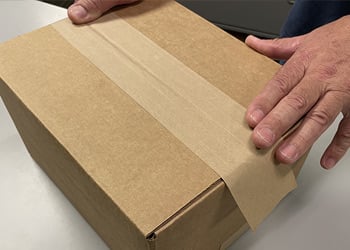 Water-activated tape (WAT) performs differently from pressure-sensitive tape in one critical way: it doesn't just stick to a carton, it bonds with it. When activated with water, the starch-based adhesive penetrates the outer layer of the corrugated surface and forms a permanent, fiber-tearing bond. Once it's set, it's set.
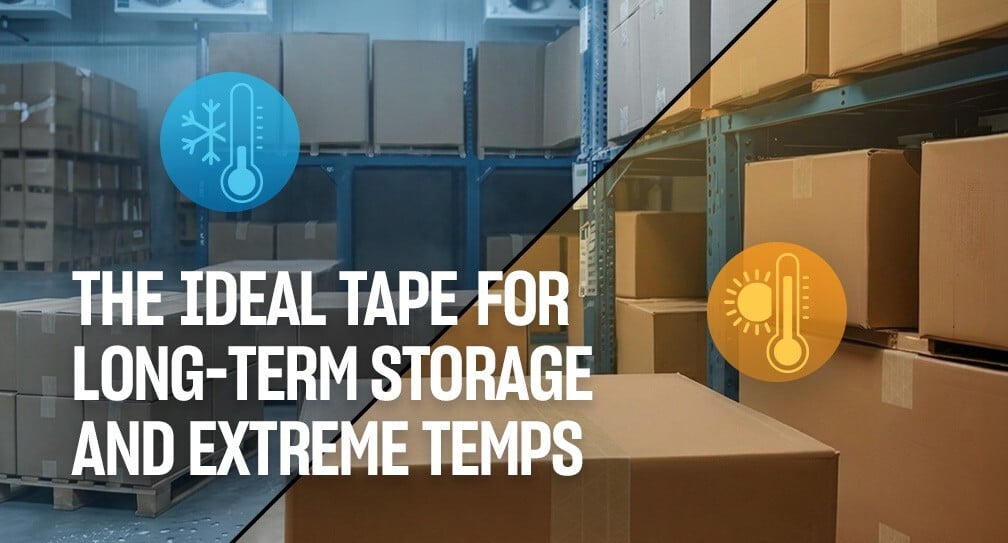
That bond doesn't loosen in a freezer. It doesn't soften in desert heat. It doesn't lift at the edges in high humidity. IPG's WAT products are engineered to maintain their seal across the full spectrum of real-world storage and shipping environments, from sub-zero cold chain to high-heat industrial facilities, to tropical warehouses, all with a bond that can last for multiple years on the carton.
That's the core advantage for any operation dealing with long-term storage, irregular temperature conditions, or high-value inventory where seal failure isn't acceptable.
TAPE SELECTION GUIDE
3 Things to Evaluate Before Specifying Tape for Long-Term Storage
For operations evaluating tape for long-term storage or extreme environments, three factors matter most:
- Bond type, not just adhesive strength. Bond type matters, not just adhesive strength. Water-activated tape is designed to bond with the corrugated carton surface, creating a strong, tamper-evident seal that helps maintain package integrity throughout the supply chain.
- Reinforcement for heavy or irregular cartons. IPG's reinforced WAT (with fiberglass strands embedded in the tape) adds tensile strength for heavy product, awkward carton weights, or stacked pallet pressure without sacrificing the permanent bond.
- Application environment vs. storage environment. WAT applies at room temperature and cures to a permanent bond regardless of where the carton goes next. For operations that pack at ambient and store in freezer or outdoor environments, this is a key advantage over alternatives.
IPG TAPE PRODUCTS
Tape Built for the Long Haul
|
Water-Activated Tape (WAT) — Standard IPG's standard WAT line delivers a permanent, fiber-tearing bond suitable for a wide range of carton weights and storage environments. Once activated and applied, the seal is tamper-evident and built to last for the life of the carton — in freezer, desert, tropical, or ambient conditions. The right choice for general long-term storage and operations looking to eliminate tape failure as a variable. |
|
Reinforced Water-Activated Tape (RWAT) For heavier cartons, high-stack pallets, or irregular packaging that puts extra stress on the seal, IPG's reinforced WAT adds embedded fiberglass strands for superior tensile strength — without compromising the permanent bond. Ideal for industrial, manufacturing, and high-density storage environments where standard tape may stretch or fail under load. |
BOTTOM LINE
For Long-Term Storage, the Bond Has to Last
For long-term storage, extreme temperatures, high-value inventory, or any environment where package integrity is critical, water-activated tape (WAT) provides a durable, tamper-evident sealing solution designed to maintain a strong bond throughout the storage and shipping cycle.
The bond forms once, at application and holds for the life of the carton, regardless of where it goes next. That's not a marketing claim, it's the chemistry of how water-activated adhesive works. Once it's bonded, it's bonded.