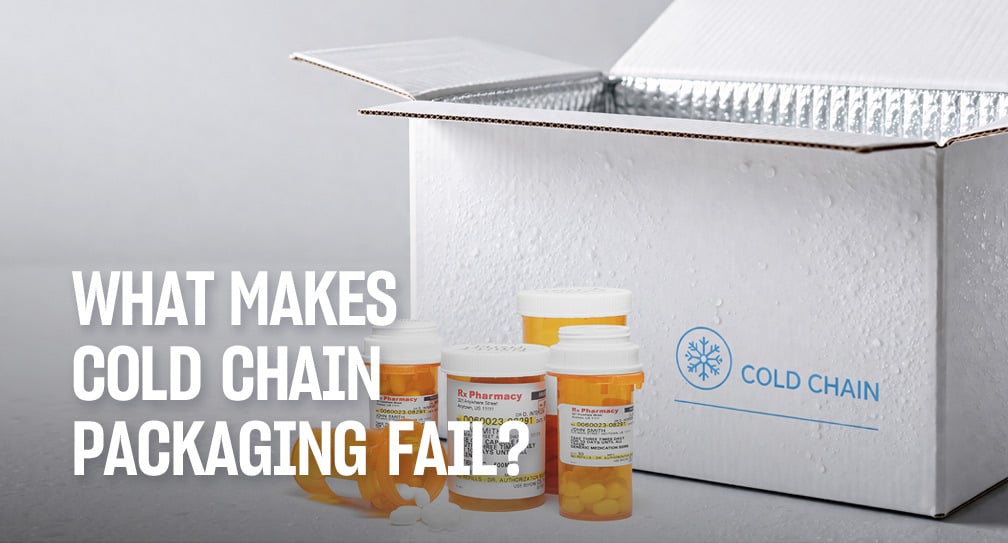
Temperature excursions don’t announce themselves. A package leaves your facility properly chilled, passes through a sorting hub on a warm afternoon, sits in a delivery vehicle without climate control — and arrives compromised. For pharmaceuticals, perishable foods, and other temperature-sensitive goods, that failure isn’t just a product loss. It’s a compliance risk, a liability, and a broken promise to your customer.
The answer starts at the packaging level. Here’s what cold chain packaging failure actually looks like, who it affects most, and how IPG’s cold chain solutions keep temperature-sensitive shipments intact from origin to delivery.
THE PROBLEM
Why refrigerated logistics fail — and where
Cold chain failure rarely happens in a single dramatic moment. It accumulates across handoffs — warehouse to carrier, carrier to sorting facility, facility to last-mile delivery. Each transition is an opportunity for temperature variance to creep in. Inadequate insulation means the product inside absorbs that variance directly.
Common failure points include insufficient packaging insulation at origin, delays during transit or customs, extreme ambient temperatures in summer months, and last-mile delivery environments with no refrigeration. The packaging itself is the last line of defense at every one of these points.
|
Industries most at risk: Pharmaceutical and biotech shippers, meal kit and direct-to-consumer food brands, specialty food distributors, healthcare product fulfillment centers, and e-commerce retailers shipping temperature-sensitive consumer goods. |
BY INDUSTRY
What’s at stake across sectors
 Pharmaceuticals & biotech: Many medications, vaccines, and biologics require strict temperature ranges. A single excursion can render a shipment non-compliant and unusable, with significant regulatory and financial consequences.
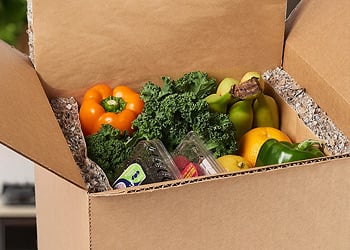
Food & meal kits: Perishable food items spoil rapidly outside refrigeration windows. Consumer trust and food safety are both at stake when packaging fails mid-transit, and chargebacks or returns follow quickly.
Specialty retail: Premium products like artisan foods, skincare, and nutraceuticals require consistent temperatures to preserve efficacy, texture, and shelf appeal upon delivery.
E-commerce fulfillment: High shipment volumes and variable last-mile conditions make e-commerce one of the most demanding environments for cold chain integrity — and one of the hardest to monitor at scale.
IPG COLD CHAIN SOLUTIONS
Purpose-built packaging to maintain temperature integrity
IPG’s cold chain portfolio is designed around one objective: keeping the temperature inside the package stable, regardless of what’s happening outside. The product range includes insulated shipping materials, metalized bubble solutions, and mailers — each engineered for specific shipping profiles and performance requirements.
|
Chill-R — 2-PC RECYCLABLE KRAFT PAPER INSULATED INSERT A patented two-piece pre-consumer paper insulation adhered between two kraft paper layers. Chill-R delivers a proven R-value and wall-to-wall stability for perishable deliveries and sensitive medical products — and is curbside recyclable and repulpable, making it an ideal choice for sustainability-focused shippers. |
|
METALIZED BUBBLE WRAP
|
|
METALIZED BUBBLE MAILERS A compact, ready-to-ship format combining the thermal protection of a metalized bubble wrap with the convenience of a self-contained mailer. Well suited for e-commerce, pharmaceutical samples, and specialty food shipments where speed to pack and unboxing presentation both matter. |
CHOOSING THE RIGHT SOLUTION
Matching cold chain packaging to your shipment profile
Not every temperature-sensitive shipment has the same requirements. The right cold chain packaging depends on the product’s temperature range, the expected transit duration, ambient conditions along the route, and sustainability goals.
|
Shipment profile |
Recommended solution |
Key benefit |
|---|---|---|
|
Pressure-sensitive; immediate tack on contact |
Starch-based; bonds permanently into corrugated fibers |
Chemical/thermal bond; requires cure time |
|
Instant — manual or fully automated |
Fast with dispenser; no drying delay |
Slower — pot life, open time, and cure window required |
|
Can be cut and resealed |
WAT tears the box if tampered; seal cannot be cleanly removed |
Bond breaks but no visual indicator |
|
Acrylic CST: –20°F to 200°F+ range available |
Stable across refrigerated and ambient ranges |
Hot-melt degrades in cold; requires reformulation for temp extremes |
BOTTOM LINE
Packaging is the only variable you fully control in transit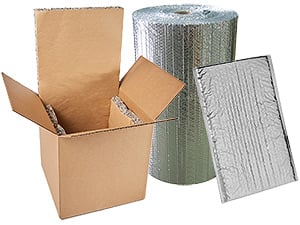
You can’t control ambient temperatures across a multi-leg shipment. You can’t guarantee carrier handling environments or account for unexpected delays. What you can control is how well your packaging maintains the temperature inside the package — from the moment it’s sealed at your facility to the moment it reaches the end customer.
IPG’s cold chain solutions are designed for exactly that challenge: insulated, proven, and built to perform across the real-world conditions that refrigerated logistics demand. Whether you’re shipping pharmaceuticals, meal kits, or premium perishables, IPG has a solution matched to your shipment profile.