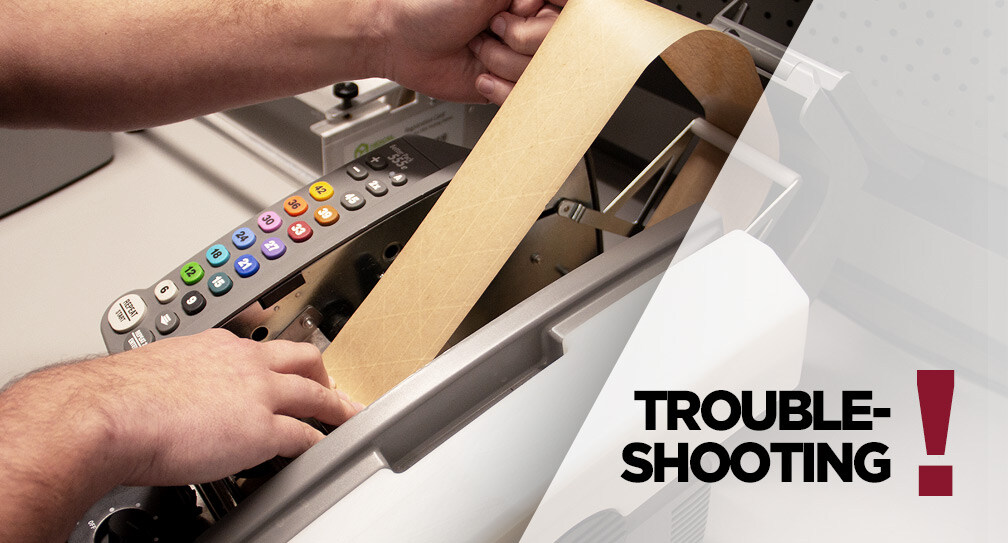
THE COST OF UNPLANNED DOWNTIME
Peak Season Doesn't Forgive a Line That Goes Down
 Every July, packaging operations start the same quiet calculation. Q4 volume is coming, and whatever equipment issues have been tolerated at a manageable pace all year will not stay manageable once order volume climbs. A water-activated tabletop tape dispenser that jams twice a shift is an annoyance in July. In December, it is a bottleneck that backs up an entire line.
Unplanned downtime rarely announces itself ahead of time. A worn blade, a brush that has not been cleaned in months, a heater running below spec, these are small issues individually. Stacked together across a full shift, they show up as missed ship dates and idle packers waiting on a machine that should be running.
A machine health audit is the operational equivalent of a preseason physical. It finds the small issues while they are still small, on your schedule rather than the machine's.
MACHINE HEALTH AUDITS EXPLAINED
What Actually Gets Checked
A machine health audit is a structured inspection of your packaging equipment, performed either by your own team using the manufacturer's maintenance schedule or by a factory trained technician for a deeper diagnostic pass. For water activated tape dispensers and case sealing equipment, that typically covers:
-
Water application brushes and moistening system, checked for glue buildup that reduces tape adhesion
-
Cutting blades, inspected for dullness and residue that causes ragged or incomplete tape cuts
-
Heaters and pressure plates, tested to confirm consistent operating temperature
-
Tape path and dispensing mechanism, checked for wear that leads to jams under sustained volume
-
Electrical and control components, on electric and automated models.
YOUR BASELINE
The Maintenance You Can Do Yourself
Better Packages dispensers are built to run for years with minimal intervention, but a little regular attention keeps them at full performance. This is the manufacturer's own recommended schedule.
| FREQUENCY |
TASK |
|---|---|
|
Weekly |
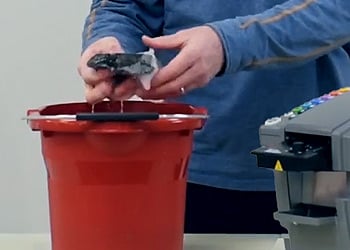
Wash water brushes and the water tank with mild soap and rinse well. Clear accumulated tape dust with a dry brush or blower. |
|
Monthly |
Scrape accumulated glue from the blades without dulling the cutting edge, then apply a light coat of machine oil to the back of the blade. On 555 models, add a few drops of oil to the felt pads. |
|
Annually |
Thoroughly clean accumulated tape and debris from inside the machine, clear glue from heaters and pressure plates, oil both blades, and wipe down all exterior covers. |
WHEN SELF-MAINTENANCE ISN'T ENOUGH
Bring In a Factory Trained Technician
Weekly and monthly upkeep handles the routine wear every dispenser sees. But ahead of a peak season, it is worth having someone who services this equipment for a living take a closer look. That is what a professional machine health audit is for.
|
IPG Service and Programs, Machine Health Audits Backed by the People Who Build the Equipment Factory trained technicians are available across all major and minor North American markets, with mechanical, electrical, and software specialist capability. Support covers new machinery installation, operator training, machine commissioning, preventative maintenance, and health audits, on top of repair services. Parts are stocked in the US and available within 24 hours of diagnosis, and a centralized service call center handles troubleshooting, parts diagnosis, and scheduling in one call. |
|
Beyond the Repair, a Documented Maintenance History IPG's tracking and reporting system captures work order data by serial number and logs every service performed on your equipment. That history turns into a customizable analytics report, giving your team a documented maintenance record to plan next year's budget around rather than guessing at replacement timing. |
CHOOSING YOUR APPROACH
Routine Care and a Professional Audit Work Together
Neither replaces the other. Routine cleaning prevents the everyday wear that causes jams. A professional audit catches the deeper issues, the ones that only show up under sustained volume, before Q4 puts them to the test.
|
|
WEEKLY / MONTHLY CARE |
PROFESSIONAL AUDIT |
|
Performed By |
Your packaging team |
Factory trained technician |
|
Catches |
Everyday buildup, glue residue, dust |
Internal wear, electrical drift, capacity limits |
|
Best Timed |
Ongoing, on schedule |
Before peak season volume |
BOTTOM LINE
Book the Audit Before You Need It
The operations teams that get through Q4 without a line going down are rarely the ones with newer equipment. They are the ones who checked it in July. A machine health audit costs a fraction of what a single day of downtime costs during peak volume, and it is far easier to schedule in the summer than to troubleshoot in December.
|
Ready to Get Ahead of Peak Season ? Request a machine health audit before Q4 volume hits, or review your dispenser's preventive maintenance schedule. |